


KTM Top End Rebuild: When to Do It and What You Need
When to rebuild, what the manual says, and what goes in the kit
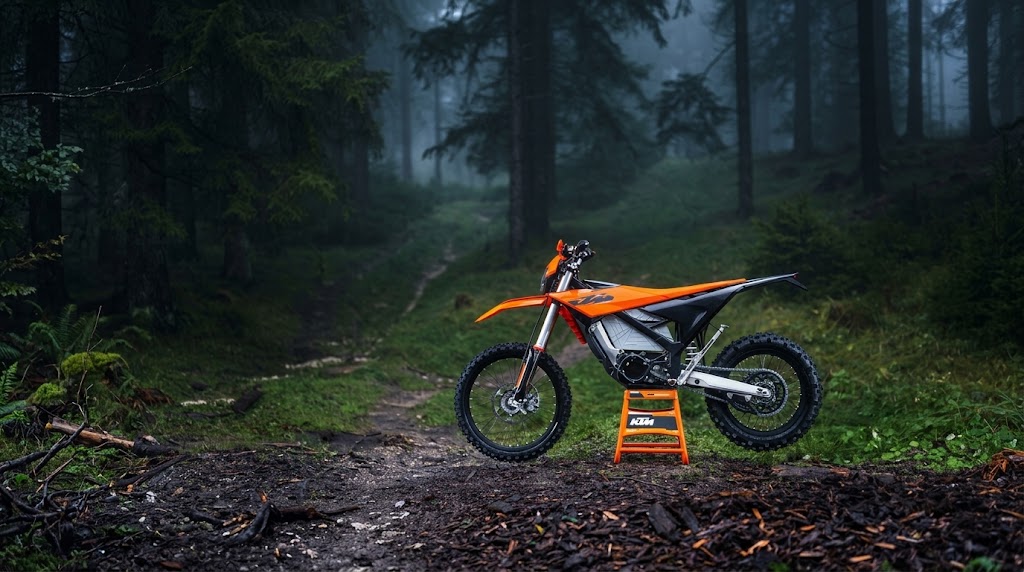
If you ride a KTM two-stroke long enough, the top end rebuild stops being a scary phrase and starts being just another part of the calendar, like tires and grips. The hard part is not the work. It is knowing when it is actually time, and knowing what to buy so you get it right the first time. This guide helps with both.
We will walk through what a top end rebuild actually is, the signs worth paying attention to, how the job differs between two-strokes and four-strokes, where to find the service intervals for your exact bike, and what goes into a rebuild kit. Whether you are turning the wrenches yourself or handing it to a shop, you will know what you are dealing with by the end.
What Is a Top End Rebuild?
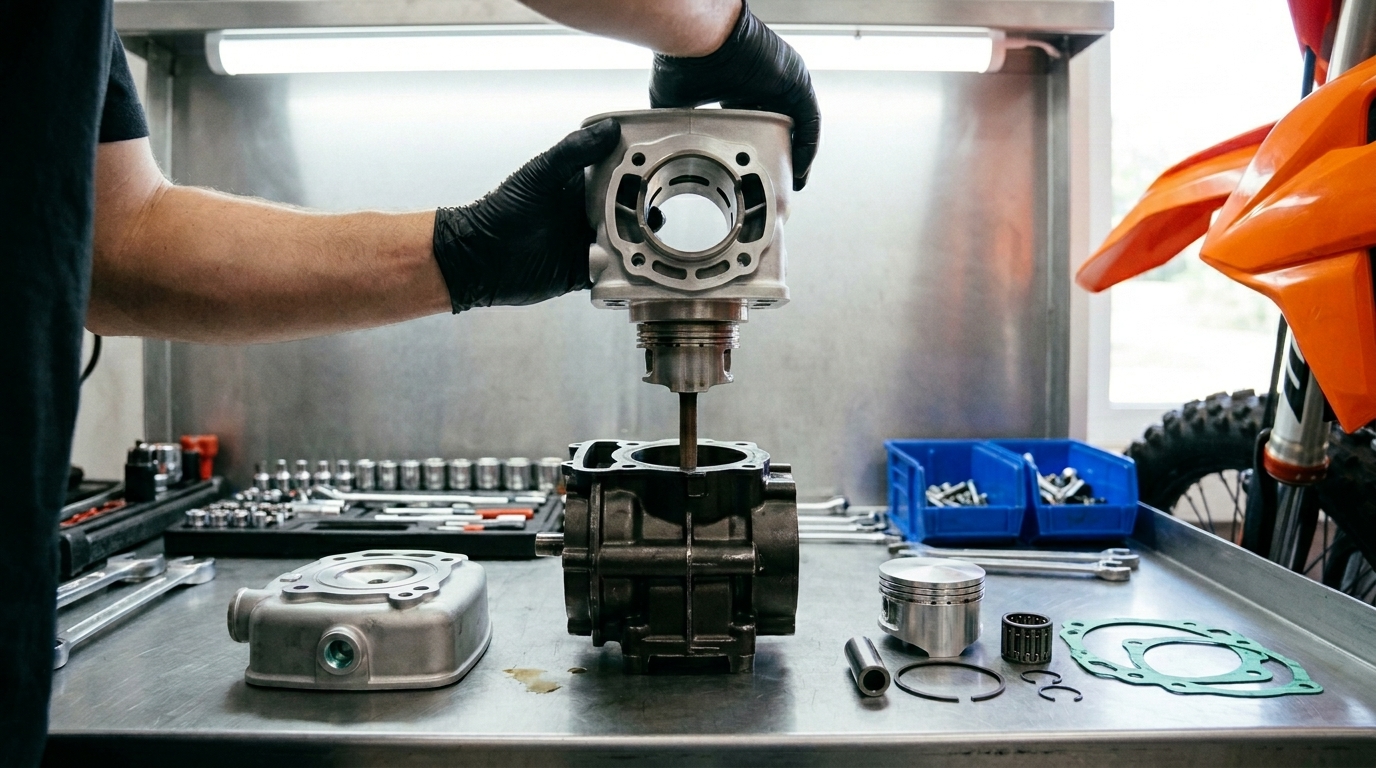
A top end rebuild is exactly what it sounds like: you replace the wear parts in the top end of the engine, the piston, rings, and related hardware that live in the cylinder above the crankshaft. On a two-stroke that is the piston, rings, wristpin, small-end bearing, and gaskets. Over time those parts wear, the piston and rings lose their seal against the cylinder wall, and the engine loses compression and power. A top end rebuild brings all of that back to spec.
It is one of the most routine jobs there is on a KTM two-stroke, not a disaster and not something to put off. Think of it the way you think about tires and grips: a normal part of the calendar. Staying on top of it is how you keep a cheap, predictable job from turning into an expensive one.
The two questions every rider asks when they get to this point are the same two we are going to answer here: how do I know it is time for a top end rebuild, and what do I need to buy to do it right. Let's take them in order.
How to Know It's Time for a Top End Rebuild
There is no dashboard light for a worn piston. Riders tend to go off three things: engine hours, how the bike feels, and what they see when the pipe and cylinder come off. None of the signs below is a diagnosis on its own. Think of them as reasons to inspect, not a verdict. The only way to know for sure is to pull the top end and look, or have a qualified shop do it.
A note before we start: this article is general guidance to help you understand top end service, not a professional diagnosis of your specific engine. Service intervals differ by exact model and model year, so always follow the maintenance schedule in your own KTM owner's manual, and when you are unsure, have a qualified technician inspect the bike.
- Engine hours since the last piston: This is the figure most riders track, and your model's KTM owner's manual lists the service intervals KTM recommends for it. Running an hour meter lets you compare where you are against the manual's schedule. Intervals vary by model, by model year, and by how the bike is ridden, so treat the manual's number as the reference and the notes below as general context, not a replacement for it.
- Loss of compression: Some riders notice this by feel before measuring it. A fresh top end tends to push back with firm resistance when you kick it or bump it over; a tired one can feel softer or easier to turn through than you remember. That change may point to worn rings losing their seal, though it can have other causes. If you want a real number instead of a guess, a compression tester gives you something to compare against your manual's spec.
- Power that may have fallen off: A fresh top end pulls hard across the range. As a piston and rings wear, power can soften, and riders often notice it most up top where the bike does not rev out like it used to. A flat-feeling bike can have many causes, fuel, air filter, jetting, and more, so worn rings or piston are one possibility worth checking among several, not a foregone conclusion.
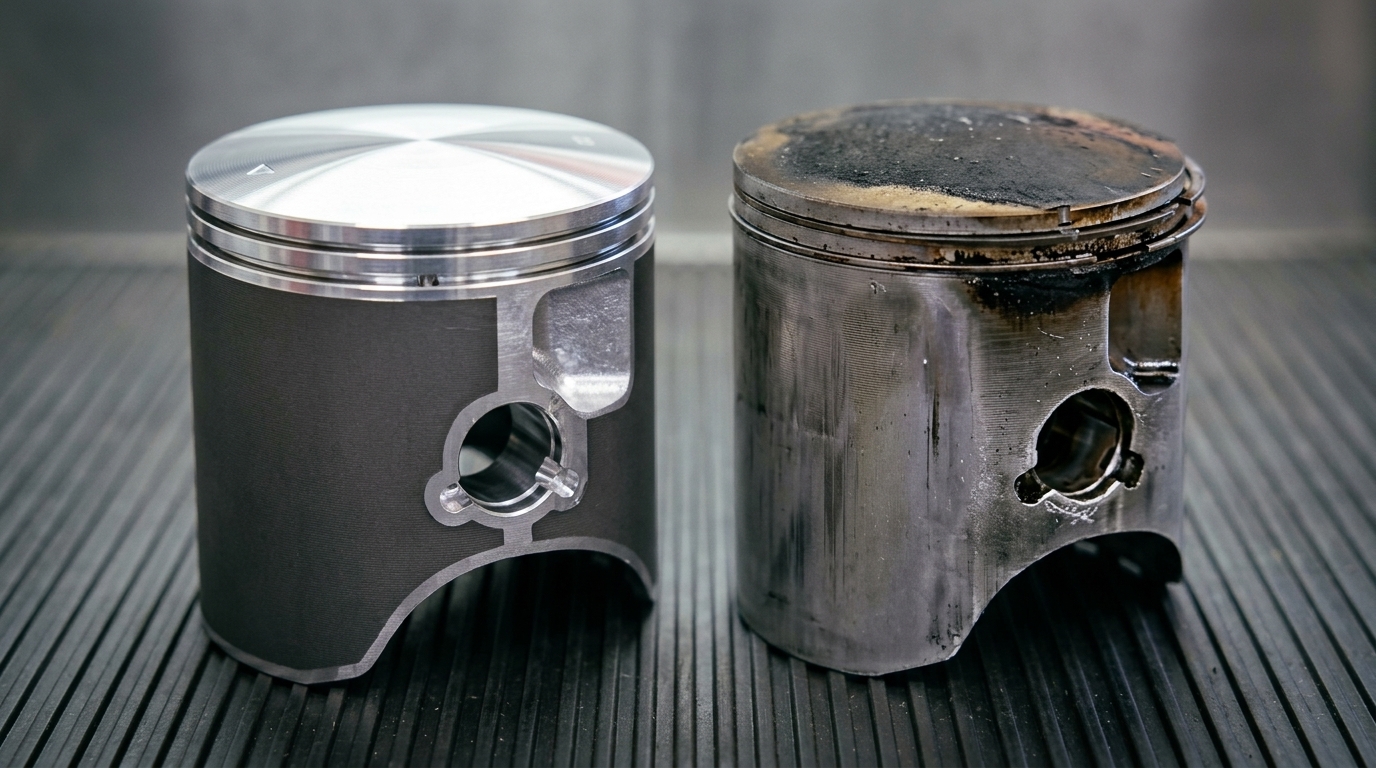
- What you see when you look: Once you are in there, the piston tells the story. Vertical scuffing on the skirt, worn or gummed-up rings, discoloration, and any play in the wristpin or small-end bearing are all things worth noting. Learning what a good one looks like makes it easier to spot a worn one.
Ideal vs. Harder Operating Conditions
KTM's manuals draw a line between normal use and harder conditions, and they shorten service intervals accordingly.1,2 A bike ridden in extreme dust, sand, or heat, or one run without a properly cleaned, oiled, and seated air filter, can wear its top end faster than the same bike ridden in mild conditions and maintained well. Dust that gets past a poorly maintained filter is especially hard on the top end. Follow the condition that matches your riding, and when in doubt, follow the shorter interval and inspect.
2-Stroke vs 4-Stroke Top End Rebuilds: What's Different
Before we get to the model chart, it is worth understanding why the job itself is so different depending on what you ride. This is the part that trips up a lot of newer riders coming from one engine type to the other.
2-Stroke Top End Rebuilds
This is where most of the KTM youth and MX lineup lives: the 65, 85, 125, 250, and 300. On KTM's current full-size bikes, a two-stroke piston comes due at about the same hours as a four-stroke, but the two-stroke job is far simpler, which is why so many riders do it themselves.3,4 In most cases you are replacing a piston, rings, gaskets, and the small-end bearing, and the job is straightforward enough that a rider with basic mechanical skills and a torque wrench can handle it in an afternoon. They are also easier to inspect, since so much shows up in feel and in a quick visual once the pipe and cylinder are off.
4-Stroke Top End Rebuilds
KTM's current schedule calls for a new SX-F piston at 45 hours4, the same as the current two-strokes, so the difference is less about how often and more about how involved the job is. Now you are dealing with valves, cam timing, and tighter torque-spec sensitivity, and the consequences of getting it wrong are more expensive. Plenty of four-stroke owners are perfectly capable of doing their own, but this is the one where more riders choose to hand it to a shop. If that is you, a good powersports service department will get it done right the first time (a trusted shop can handle it). We are covering four-strokes here so owners are oriented, but the heart of this guide is the two-stroke crowd, because that is who is doing this job most often.
KTM Top End Rebuild Intervals by Model
The table below is a general, at-a-glance reference only. The authoritative service intervals for your bike are in your model's KTM owner's manual, listed by exact model and model year, and they are what you should follow. Use this table to get oriented, then confirm against your manual and inspect the top end rather than relying on a single number.
| Model | Engine | Piston (top end) interval | Where to confirm |
|---|---|---|---|
| KTM 65 SX | 2-stroke | Every 45 hrs; piston and cylinder checked every 15 hrs1 | 2024+ 65 SX owner's manual |
| KTM 85 SX | 2-stroke | Every 20 hrs; every 10 hrs if ridden regularly in sand2 | 85 SX owner's manual (figures from the 2020 model year) |
| KTM 125 SX | 2-stroke | Every 45 hrs (2023+ generation)3,5 | 125 SX owner's manual for your year |
| KTM 250 SX | 2-stroke | Every 45 hrs (2023+ generation)3,5 | 250 SX owner's manual for your year |
| KTM 300 SX / 300 XC | 2-stroke | Every 45 hrs (2023+ SX, 2024+ XC)3,5 | 300 SX / XC owner's manual for your year |
| KTM 250 / 350 SX-F (4-stroke, ref.) | 4-stroke | Every 45 hrs; major engine service every 90 hrs (2023+ generation)4,5 | SX-F owner's manual for your year |
The intervals in this table are general guidance drawn from KTM's published figures and common shop experience, not a professional diagnosis of your engine. Every figure should be confirmed against the exact-model, exact-year KTM owner's manual, which is the schedule you should follow. Always defer to your own manual.
How Often Does a KTM 65 or 85 Need a Top End?
On the current 65 SX, KTM's schedule calls for a new piston every 45 hours, with the piston and cylinder checked every 15 hours along the way.1 The 85 SX has run on a tighter schedule: the 2020 manual calls for a new piston every 20 hours, and every 10 hours if the bike is ridden regularly in sand.2 Youth bikes spend a lot of their life at high rpm, so do not skip the in-between checks.
How Many Hours on a KTM 250 or 300 Top End?
On the current generation (2023 and newer SX, 2024 and newer XC), KTM's schedule calls for a new piston every 45 hours as part of the minor engine service, and a major engine service, including the connecting rod and crank bearings, every 90 hours.3,5 Older generations ran on different, generally shorter schedules, so check the manual for your year. Enduro models such as the XC-W have their own schedule, so look that one up separately.
What's in a Top End Rebuild Kit (and How to Pick the Right One)
The word "kit" scares people off because they are not sure what they are getting or whether they are buying the right thing. It is simpler than it looks. Here is what a proper top-end kit gives you and how to make sure it fits your bike.
- What's in the box: A typical two-stroke top-end rebuild kit gets you the piston, the rings, the wristpin, the small-end bearing, the circlips that lock the pin in place, and a top-end gasket set. Four-stroke kits drop the small-end bearing and some add a cam chain. A piston kit on its own may not include the gaskets or the bearing, so check the listing to see exactly what is in the box.6
- Piston sizing (the A/B/C thing): Pistons come in sizes matched to your cylinder's bore. Many aftermarket pistons, Vertex for example, come in sizes A through D, each one 0.01 mm larger than the last, with A the smallest.6 Match the kit to what your cylinder actually measures, not just what came stock, because a cylinder that has been ridden or replated can measure differently. If your cylinder is worn beyond a fresh piston's help, that is a replate conversation, not just a top-end kit.
- OEM or aftermarket: There are good options both ways, and the right call depends on the bike, the budget, and how the bike gets used. The short version is that for a fitment-critical part like a piston, quality and correct sizing matter more than saving a few dollars.
- Match it to your exact model and year: This is the number one place people order the wrong part. A 250 two-stroke from one model year is not automatically the same as the next, and the youth bikes changed over the years too. Have your exact model and year in hand when you order, and if you are not sure, ask before you buy. Getting the right kit the first time beats a return every time.
DIY or Have a Shop Do It
Two-stroke top ends are one of the most satisfying jobs you can do in your own garage, and one of the most DIY-friendly on the bike. If you can follow a torque spec, keep your parts clean and organized, and pay attention to details like ring orientation and getting everything torqued in the right sequence, this is a job many riders take on themselves. A lot of riders do their first one nervously and their tenth one without thinking about it.
That said, know where the line is. If the cylinder is scored, if you are seeing more wear than a piston and rings will fix, or if you are just not comfortable measuring and reading what the parts are telling you, there is no shame in handing it to a shop. That is especially true on the four-strokes, where valves and cam timing raise the stakes. Whichever way you go, the starting point is the same: the right kit for your bike. Get that part right and the rest is careful work.
Ready to Knock It Out?
A top end is routine maintenance on these bikes, not a crisis. Once you have confirmed the interval in your manual, find the right top-end kit for your exact KTM and get it done. Not sure which kit matches your bike? Send us your model and year and we will help you get it right the first time.
Shop KTM Top End KitsGet Help Matching Your KitSources
- KTM Sportmotorcycle GmbH, Owner's Manual: 65 SX, 2024 model year (art. no. 3214829en), service schedule and notes on difficult operating conditions.
- KTM Sportmotorcycle GmbH, Owner's Manual: 85 SX, 2020 model year (art. no. 3213998en), service schedule and guidance for regular use in sand.
- KTM Sportmotorcycle GmbH, Owner's Manual: 250 / 300 SX and XC, 2025 model year (art. no. 3240042en), service schedule (minor and major engine service).
- KTM Sportmotorcycle GmbH, Owner's Manual: 250 SX-F, 2025 model year (art. no. 3240043en), service schedule (minor and major engine service).
- KTM, KTM Service Times (offroad models through the 2025 model year).
- Vertex Pistons, top end rebuild kit contents and piston size classes (A to D in 0.01 mm steps), as published in Vertex product information.

About the author
Alex Teagarden
Alex raced off-road his entire life, competing in GNCC from amateur ranks through the pro level. He won the 4-Stroke A Lites class championship in 2014 and finished runner-up in the 250-A class in 2016. Racing for Coastal Racing Husqvarna in 2017, he claimed the 250-A class championship along with the GNCC Top Amateur Award. In 2018 he moved into the XC3 Pro-Am class, finishing runner-up with event wins at Big Buck, John Penton, and Snowshoe, and made a one-off appearance in the 125 All Star race at the High Point Pro National. In 2019 he raced the XC2 Pro class with multiple top-ten finishes, including a standout 3rd-place result in the NE Pro 2 class at the Little Raccoon National Enduro. Today he brings that same competitive instinct to content and growth marketing for powersports ecommerce brands, while leading business system transformations full time.